
Concrete hides a lot. The water lines that run beneath a slab foundation sit out of sight for decades, and when one of them finally gives way the first clue is almost never a puddle. It is something subtler — a warm stripe across the floor of a hallway, a water bill that climbed for no reason anyone can name, a faint damp smell in a closet that never quite airs out. Everett homes built on slab, and the commercial buildings along Broadway and Evergreen Way that sit the same way, all share that blind spot.
Signs Something Is Leaking Under the Concrete
Water pressure that drops off at one fixture and not the others is worth paying attention to. So is a floor that feels inexplicably warm in one patch, which usually means the failure is on a hot line rather than a cold one. Stains creeping up drywall from the baseboard, tile that has started to lift at the grout, a door that suddenly binds in its frame — each of these can point at moisture moving through the slab rather than at the fixture or the door itself.
The temptation is to treat the symptom. Homeowners shut off the main, put a towel down, repaint the stained drywall and hope the problem was condensation. It rarely was. Water under a slab does not stay put: it follows the path of least resistance through the fill beneath the concrete, softens the soil that the foundation bears on, and feeds mold in wall cavities where nobody will see it for months. By the time the damage is visible from the living room, the repair has usually grown.
Residential and commercial situations diverge quickly here. A house typically has a single failure point on a copper or PEX line under the pad. A commercial building carries a larger footprint, more branches, and often a mix of materials installed across different decades, which means isolating one bad section takes longer and the shutdown has to be planned around tenants.
Finding the Break Without Tearing Up the Floor
Nobody wants a jackhammer in the living room, and in most cases one is not needed to locate the problem. Acoustic listening equipment picks up the signature of water escaping a pressurized line through several inches of concrete. Thermal imaging shows the heat plume from a hot-water failure as a bright smear on the screen. Pressure isolation narrows the search by section, ruling out whole branches of the system before anyone touches the slab. Moisture meters confirm what the floor is actually holding.
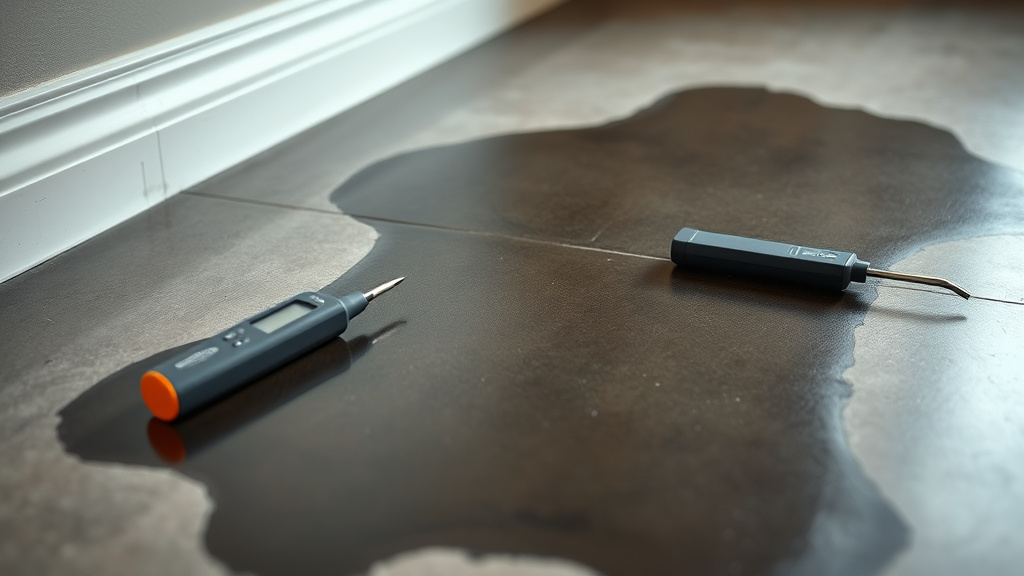
Used together, those tools usually put the break inside a small enough area that the opening in the concrete is measured in inches rather than feet. It is worth reading up on the detection methods crews rely on before the first appointment, if only so the conversation about what gets opened and why makes sense when it happens.
From there the fix depends on what the equipment found. A single pinhole in an otherwise sound line is a spot repair: open the slab, cut out the bad section, splice in new pipe, patch the concrete. A line that has failed once because the material itself is at the end of its life will fail again somewhere else, and rerouting that run overhead or around the perimeter often costs less over the following decade than opening the floor twice more. An honest assessment says which of those two situations you are in instead of defaulting to whichever is easier to sell.
Choosing Who Does the Work
Start with licensing and insurance, and verify both rather than taking a website's word for it. Washington contractor registration is public and takes a minute to check. Beyond that, ask what detection equipment the crew actually owns, because a company that subcontracts the locating step has less control over how big a hole ends up in your floor.
Ask how the patch is handled, too. Reopened concrete needs to be compacted and finished properly, and whether that is included or billed separately is the kind of detail that ought to be settled before anyone starts. Written scope, a clear description of what happens if the crew opens the slab and finds something other than what the equipment predicted, and a warranty you can read are all reasonable things to expect. Reviews help, but read the detailed ones rather than the star average — the useful ones describe how a company behaved when a job went sideways.
If you have never been through it, what the first few hours of a leak call usually look like is a fair thing to know in advance, mostly so you can tell a thorough diagnostic process from a rushed one.
One distinction matters before you pick up the phone. A leak on a pressurized supply line under the slab is one problem. A drain or sewer line under the same slab that has gone sluggish, backed up, or filled with root intrusion is a different one, and it calls for a different crew and different equipment — camera inspection and high-pressure jetting rather than leak detection and pipe splicing. If the symptoms point that direction, a drain specialist such as Everett Drain Cleaning, Snohomish County is the better first call, and sorting out which of the two you are dealing with saves everyone a wasted visit.
Keeping the Next One from Happening
Slab leaks are not entirely random. Soil movement through Snohomish County's wet winters and dry late summers puts cyclical stress on buried pipe. Water chemistry works on copper from the inside. Older installations sit on fill that has settled unevenly since the house went up. None of that is fixable, but it is all predictable enough to plan around.
Watching the water bill is the cheapest monitoring there is: a baseline you actually know means an unexplained climb stands out immediately. Reading the meter with every fixture in the house shut off is a five-minute test that tells you whether something is running when nothing should be. On an older building, having the supply lines assessed before a remodel — while the floors are coming up anyway — turns an emergency into a scheduled line item. And when a line does get replaced, the material and the routing chosen now determine whether this is a conversation you have again.
Water under a foundation is patient. It will keep going as long as it has pressure behind it, and the cost of the repair tracks how long it ran rather than how large the original hole was. That is the whole argument for acting on a warm floor or an odd bill in the same week you notice it, instead of the season after.